Loop Recorder: What It Is, Who Needs One, How It Works and What It Can’t Do
A loop recorder is a very small heart monitor that goes under the skin of your chest and watches your heartbeat for months or years. Doctors use it when something is happening to your heart that standard tests keep missing, such as fainting spells or a racing heart that comes and goes. If someone has told you that you might need one, you probably have questions about what it does, how it feels and whether it’s the same as a pacemaker.
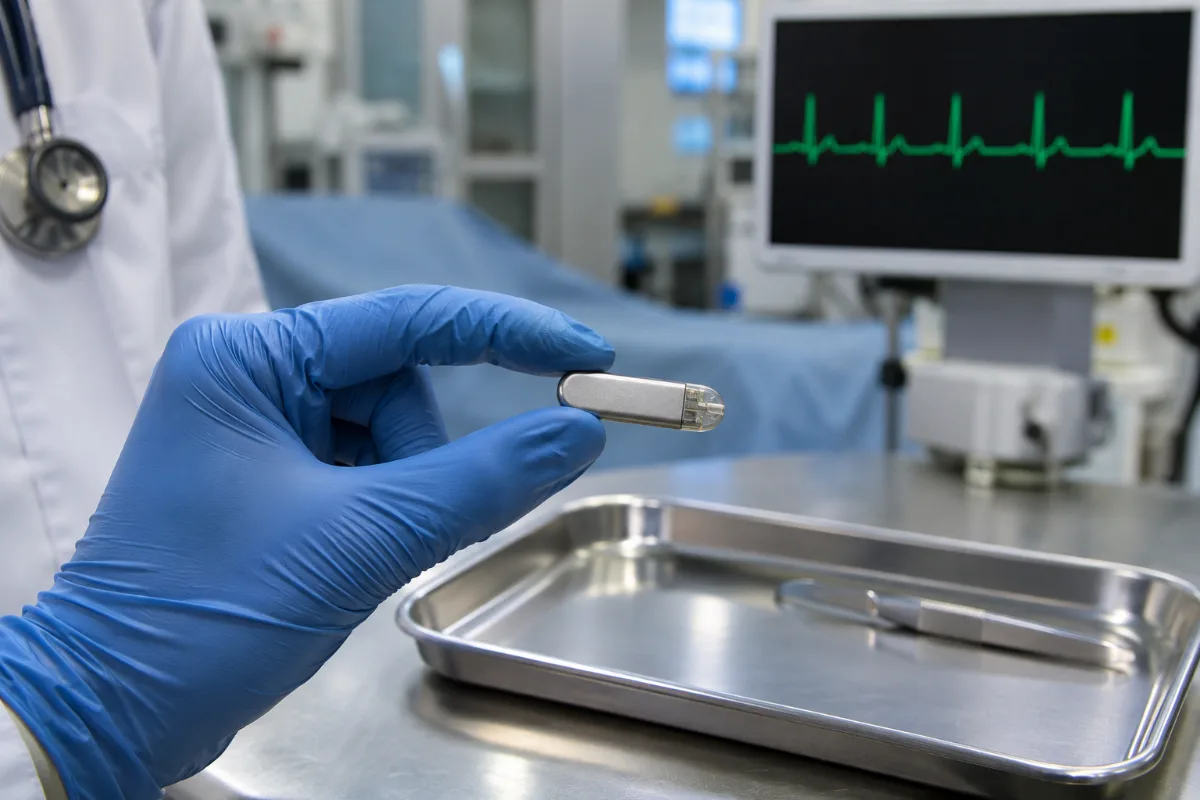
Here’s the short version. An implantable loop recorder, or ILR, is also called an insertable cardiac monitor. It records your heart’s electrical activity, much like a long-term ECG, and saves abnormal rhythms automatically or when you press a button. It doesn’t treat anything. It only collects information so your care team can find the cause of your symptoms. It’s usually placed in a short outpatient procedure and stays for about three years or until the answer is found.
This guide explains how it works, who gets one, how it compares with other heart monitors, what to expect after it’s placed, risks, cost questions and when to call your care team. It’s general information as of November 12, 2026, based on patient pages from Cleveland Clinic, Mayo Clinic and NHS hospitals plus published studies. It isn’t medical advice, and your own cardiologist knows your situation best.
- What Is a Loop Recorder?
- How Does a Loop Recorder Work?
- Who Needs a Loop Recorder?
- How Is It Different From Other Heart Monitors?
- What Happens When It’s Placed?
- What Is Living With a Loop Recorder Like?
- How Long Does It Stay In?
- What Are the Downsides and Risks?
- How Much Does a Loop Recorder Cost?
- When Should You Call Your Care Team?
- What Mistakes Do People Make?
- FAQs About Loop Recorders
- Conclusion
What Is a Loop Recorder?
It’s a slim device, roughly one to two inches long and less than half an inch thick according to Cleveland Clinic’s description, that sits just under the skin on the left side of your chest. Cleveland Clinic describes it as a heart monitor that constantly records your heart rate and rhythm. The name “loop” comes from the way it stores data: it keeps a rolling loop of recent heartbeats and saves the segments that matter.
There are no wires or patches to wear. Mayo Clinic notes that you don’t have to worry about getting the device wet while bathing or swimming. The device is only a recorder, so it can’t pace your heart or deliver shocks. That’s the key difference from a pacemaker or a defibrillator.
How Does a Loop Recorder Work?
It watches your heart’s electrical signal all day and night and saves unusual patterns. The device can be programmed to record automatically when it detects a rhythm that’s too fast, too slow or paused. You can also trigger a recording when you feel symptoms, using a handheld activator or a phone app, depending on the model. Cleveland Clinic says the recorder can save your data so your doctor can look at what your heart was doing at the exact time you felt a symptom.
The data reach your care team in one of two ways. Many devices send information wirelessly through a bedside transmitter or a mobile app, and the clinic reviews the results. Others are checked at office visits. Your team will explain how often they look at your data. Most systems aren’t watched in real time, so if you feel seriously unwell you should seek care right away instead of waiting for a download.
Who Needs a Loop Recorder?
It’s mostly used when symptoms are rare or the cause is unclear. Three situations are the most common.
The first is fainting, called syncope, that has no clear cause. In one real-world series of patients, syncope was the leading reason for implanting a recorder, at about 45 percent of cases. A recorder can show whether a heart rhythm problem happened at the time of a faint.
The second is infrequent palpitations, meaning skipped beats or a racing heart that happen too rarely to show up on a 24-hour or 30-day monitor. The third is a stroke with no known cause, called cryptogenic stroke. Doctors look for hidden atrial fibrillation, an irregular rhythm that can cause blood clots. The European Society of Cardiology’s atrial fibrillation guidelines list a loop recorder for this purpose with a class IIb recommendation, which means it may be considered. In one single-center study, about 18.5 percent of people with an ILR after a cryptogenic stroke had at least six minutes of atrial fibrillation during a median follow-up of 19 months. Finding it can change treatment, such as starting blood thinners, according to registry data.
How Is It Different From Other Heart Monitors?
The main differences are how long it records and whether it treats. The table compares the common options.
| Device | How long it records | What it does | Treats the heart? |
|---|---|---|---|
| Holter monitor | About 24 to 48 hours, worn outside | Records every heartbeat during that time | No |
| Event monitor or patch | Days to weeks, worn outside | Records when triggered or automatically | No |
| Implantable loop recorder | Up to about three years, under the skin | Long-term recording of rhythm | No |
| Pacemaker | Years, with wires to the heart | Paces the heart when it’s too slow | Yes |
This explains the question in Google’s “people also ask” box: why a loop recorder instead of a pacemaker? A pacemaker treats a slow heartbeat, but you only get one once a slow rhythm has been found. A loop recorder helps find out whether such a problem exists. If it does, your doctor may suggest a pacemaker, and the recorder can be removed at the time of that procedure, according to hospital patient information.
What Happens When It’s Placed?
It’s a short outpatient procedure, and most people go home the same day. Specific details differ between hospitals and devices. In general, the skin on the upper left chest is numbed with local anesthetic, a very small cut is made, and the recorder is slipped under the skin. The cut is closed with glue, stitches or strips.
Cleveland Clinic says the procedure takes about 20 to 30 minutes, though with preparation and recovery you might be there four to six hours. Other sources describe shorter times, so ask your own team. Some soreness or bruising for a few days is common, and your team will tell you what activities to avoid while it heals.
What Is Living With a Loop Recorder Like?
Most people forget it’s there after the wound heals, but a few practical points matter. Mayo Clinic says the device is considered safe for MRI, but you should always tell your team and the imaging center beforehand. Other sources advise checking with your cardiologist first, because an MRI can sometimes cause a false reading on the device. MRI rules depend on the model, so don’t assume.
It may set off airport metal detectors, and your team can give you a device identification card. Keep your activator or phone app handy if you were given one, and press the button when you have symptoms. Write down what you were doing and how you felt, since that helps your doctor match symptoms to your rhythm.
How Long Does It Stay In?
It stays until it gives an answer, or until the battery runs out. Cleveland Clinic and Mayo Clinic both say up to about three years. Some manufacturer materials give longer figures for newer models, so check yours. Many people have it removed earlier, once a rhythm problem has been captured or the doctor has enough information.
Removal is a small procedure similar to the placement. An NHS hospital leaflet says the device can safely stay in after the battery is depleted but it won’t be working, so removal is generally recommended. You may have a slightly larger scar and some sensitivity near the site for a few weeks.
What Are the Downsides and Risks?
The main downside is that it only records; it doesn’t treat. It can also take a long time to catch a rare event, and it needs a minor procedure. Risks are small. Cleveland Clinic lists infection at the site and an allergic reaction to the local anesthetic. Mayo Clinic adds bleeding and notes that some people have inflammation around the device. Complications are described as uncommon. An infection may mean the device has to come out.
Other downsides are practical. Your team has to review the recordings to decide which ones matter, and a small scar remains after the device is placed and removed. Also, the device reveals problems but doesn’t prove that one caused your symptom, so your doctor interprets the results with the rest of your health picture.
How Much Does a Loop Recorder Cost?
Costs vary widely, and I couldn’t find one authoritative number. Cash-price estimates for implantation run from about $7,600 to about $9,800 depending on the setting, and one patient forum reported a much higher bill, so treat all of these as rough. Medtronic, a maker of these devices, says loop recorders are widely covered by Medicare and most private insurers, but coverage varies by plan.
Ask your cardiology office and your insurer about the full cost, including copays and charges for reviewing the data. People sometimes ask whether there’s a monthly fee. No standard monthly fee turned up in this research. A few patients mention recurring charges for data review, but those are personal reports, so confirm with your own clinic.
When Should You Call Your Care Team?
Call if the site looks infected or something feels wrong. Contact your team for redness that spreads, warmth, swelling, drainage, a fever or increasing pain at the site. Also call if the device seems to move, if the skin over it is breaking down or if you have questions about an alert. Seek emergency care for fainting, chest pain, severe shortness of breath or stroke signs, and don’t wait for the recorder to transmit. In the U.S., call 911.
What Mistakes Do People Make?
The biggest is thinking the recorder protects you. It doesn’t treat or prevent anything, so you still need to act on symptoms. Another is forgetting to tell imaging staff about the device before an MRI. People also stop pressing the activator, skip transmissions or assume their team sees data instantly. And some expect fast answers, when a recorder is designed for events that happen rarely.
FAQs About Loop Recorders
What is a loop recorder?
A small device placed under the skin of the chest that records your heart rhythm for up to about three years to help find the cause of symptoms.
What is a loop recorder used for?
Unexplained fainting, rare palpitations and finding hidden atrial fibrillation after a stroke of unknown cause.
Is a loop recorder the same as a pacemaker?
No. A loop recorder only records, and a pacemaker treats a slow heart rhythm with electrical pulses.
How long does a loop recorder stay in?
Up to about three years, or until your doctor has the answer. It’s then usually removed.
Is a loop recorder safe for MRI?
Many are considered safe, but tell your care team first, because rules depend on the model.
What is the downside to a loop recorder?
It’s diagnostic only, needs a minor procedure and has small risks such as infection, bleeding or inflammation.
Does a loop recorder hurt?
You may have soreness or bruising for a few days after placement. Contact your team if pain gets worse.
Is there a monthly charge for a loop recorder?
No standard fee was found. Ask your clinic and insurer about data-review charges and copays.
Can I swim or shower with a loop recorder?
Mayo Clinic says you don’t need to worry about it getting wet, once the site has healed and your team agrees.
Conclusion
A loop recorder is a tiny diagnostic heart monitor that helps doctors find the cause of fainting, rare palpitations and some strokes. It’s different from a pacemaker because it records and doesn’t treat, and it stays in for up to about three years.
If you’ve been offered one, ask your care team how data will be checked, whether your model is MRI-safe, what costs to expect and when it will come out. Get urgent help for fainting, chest pain or stroke signs, and don’t rely on the device to alert anyone for you.